

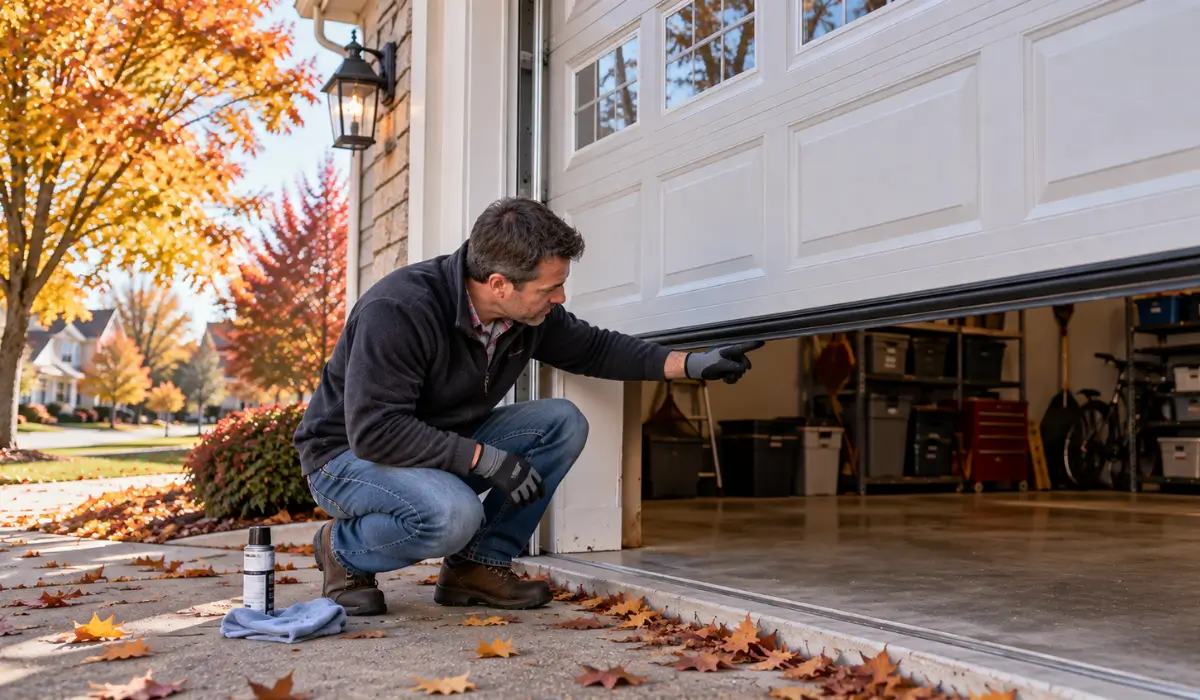
Weatherproofing your garage starts with checking the garage door weather seal, perimeter seals, visible gaps, floor edge, insulation, and door operation. One afternoon of basic fall maintenance can reduce drafts and help keep moisture, leaves, dirt, and pests outside.
For Chicagoland homeowners, fall is a practical time to handle these checks before colder weather arrives. Pairing weatherproofing with fall garage door maintenance can also reveal operating problems that are easier to address before winter.
Effective garage weatherproofing involves more than replacing the rubber along the bottom of the door. Air and moisture can enter around the sides, top, threshold, or uneven areas where the closed door no longer meets its seals correctly.
Set aside an afternoon for inspection and basic maintenance—not adjustments to springs, cables, tracks, or other tensioned hardware.
A simple schedule keeps the project manageable:
1. 10 minutes: Look for visible gaps around the closed door.
2. 20 minutes: Inspect seals and clear loose debris.
3. 15 minutes: Test the opener and safety features.
4. 15 minutes: Lubricate appropriate components.
5. 20 minutes: Check insulation, drainage, and overall door condition.
If you uncover damaged hardware or uneven door movement, stop treating the problem as routine weatherproofing. That distinction is an important part of a useful fall garage checklist.
Start along the bottom of the closed door. Cracks, flattened sections, brittleness, missing material, moisture damage, or inconsistent floor contact can indicate that the seal is deteriorating.
A worn seal can leave room for cold air, dirt, leaves, insects, and wind-driven moisture. A garage door weather seal replacement may be appropriate when the door otherwise closes correctly, but the replacement material must match the existing door and retainer design.
Some homeowners may be able to replace an accessible rubber bottom seal when the manufacturer permits homeowner replacement, the correct seal is known, and the work does not involve cables, brackets, springs, or tensioned hardware. Stop and contact a professional if replacement brings you near those components.
Move from visual inspection to simple maintenance and safety checks. Each step should tell you either that the area looks serviceable or that something needs closer attention.
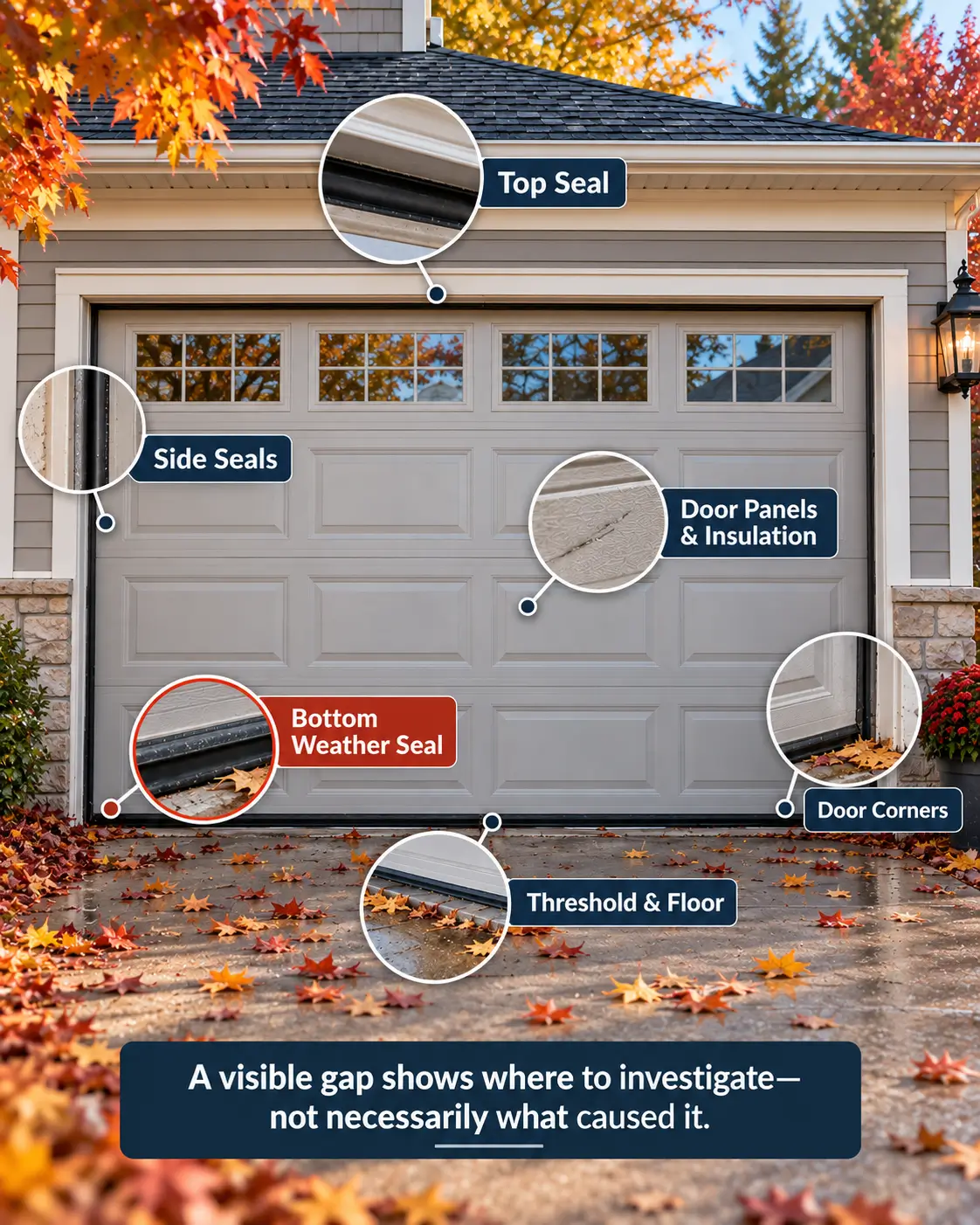
Check the full width of the door, especially the corners and uneven areas of the floor. Consistent contact matters because even a new seal may leave openings when the door or floor prevents it from sitting correctly.
Inspect the weather stripping along both sides and across the top. Brittle material, loose sections, warping, or visible daylight can indicate that the perimeter no longer seals effectively.
The garage door side seal performs a different job from the bottom seal, so inspect both rather than assuming one replacement will correct every draft.
Close the door and stand inside during daylight. Visible light can identify areas worth investigating, but an uneven gap does not prove that weather stripping is the cause.
Leaves, dirt patterns, insects, and water can provide additional clues. Floor slope, drainage, surface condition, and an existing garage door threshold seal may influence water entry, so replacing weather stripping will not correct every moisture problem.
Remove leaves, cobwebs, dirt, and small stones without loosening track hardware. Clean surroundings support normal movement, but a bent track, binding door, shaking, or damaged hardware requires more than seasonal cleaning.
Innovative Garage Door provides residential garage door repairs when an operating problem moves beyond basic maintenance.
Hinges, bearings, and applicable roller components may require periodic maintenance. Follow the door manufacturer’s instructions and use only products intended for the applicable components.
Amarr’s garage door safety recommendations reinforce safe care around garage door systems. If you cannot identify a component or its maintenance requirements, leave it alone.
Test safety-reversal features according to your opener manufacturer’s instructions, and keep photo-eye sensors clean and unobstructed. LiftMaster’s garage door opener safety guidance provides additional safety information for automatic garage door systems.
If the door does not respond as specified, stop using the automatic opener until the problem is evaluated. Never bypass or reposition safety equipment to keep the opener running.
Test the wall control, remotes, and features your system supports, such as a backup battery or connected notifications. Sensors, controls, power, settings, and door resistance can all affect operation.
Our team works with residential garage door openers when troubleshooting goes beyond routine homeowner checks.
Look for pooling water, deteriorated concrete, uneven surfaces, or a damaged threshold. These conditions can interfere with sealing even when the door-mounted rubber remains in reasonable condition.
Keep walking paths clear as winter equipment returns to the garage. Drainage and safe access are part of practical garage winter preparation, not separate concerns.
Loose, crushed, wet, or missing insulation can affect garage comfort, especially in an attached garage. Insulation does not, however, correct air leaking around a poorly sealed opening.
Check windows, the garage-to-house entry door, walls, ceiling areas, and ventilation as well. Do not block required ventilation while trying to eliminate drafts.
Broken springs, frayed cables, bent tracks, significant imbalance, and persistent operating problems belong outside routine DIY weatherproofing. DASMA’s garage door safety tips provide consumer guidance for working safely around garage door systems.
Innovative Garage Door handles torsion springs, cables, openers, installations, and other residential garage door services. Leave unfamiliar tensioned hardware and major adjustments to qualified professionals.
The safest dividing line is not how easy a repair looks. Routine inspection, cleaning, and accessible maintenance differ substantially from work that changes door balance or involves tensioned components.
| Reasonable DIY Check | Professional Attention |
|---|---|
| Inspect accessible seals | Broken springs |
| Check for visible gaps | Significant imbalance |
| Clear loose debris | Frayed cables |
| Inspect water entry | Bent tracks |
| Test safety features as directed | Persistent operating problems |
A draft may result from deteriorated weather stripping, but an uneven gap can point to a door-position or hardware problem. Replacing a seal without identifying why the opening exists can leave the original problem unresolved.
Existing movement or hardware problems deserve attention before colder conditions add another complication. Our information on garage door repair before winter explains that seasonal connection in more detail.
A sealed garage door cannot compensate for every weak point. Windows, the garage-to-house entry door, insulation, drainage, ventilation, and floor conditions also influence comfort and moisture control.
Moisture deserves particular attention because persistent damp conditions can affect more than drafts. Keeping debris and moisture under control supports the preventative measures in our garage door rust prevention tips.
A fall weatherproofing check should tell you where outside air or moisture may enter and whether the door itself operates correctly. If the garage door weather seal is deteriorated while the door closes evenly and functions normally, replacing the correct sealing material may be the logical next step.
Uneven movement, damaged cables, spring trouble, bent tracks, or recurring opener problems change that decision. Address the door problem first rather than asking new weather stripping to compensate for faulty operation.
A worn seal can be a straightforward maintenance issue; damaged or tensioned hardware is not. Knowing that boundary helps homeowners prepare for winter without turning a one-afternoon project into an unsafe repair.
The team behind Innovative Garage Door has served the Chicagoland area since 1988, and Innovative Garage Door, Inc. has been open since 1995. Our residential work includes garage door repairs, torsion springs, cables, openers, installations, and custom work.
If your inspection uncovers a problem beyond routine weatherproofing, use the garage door service request form to describe what you found. Our team can help determine the appropriate next step without asking you to experiment with unfamiliar garage door hardware.

