

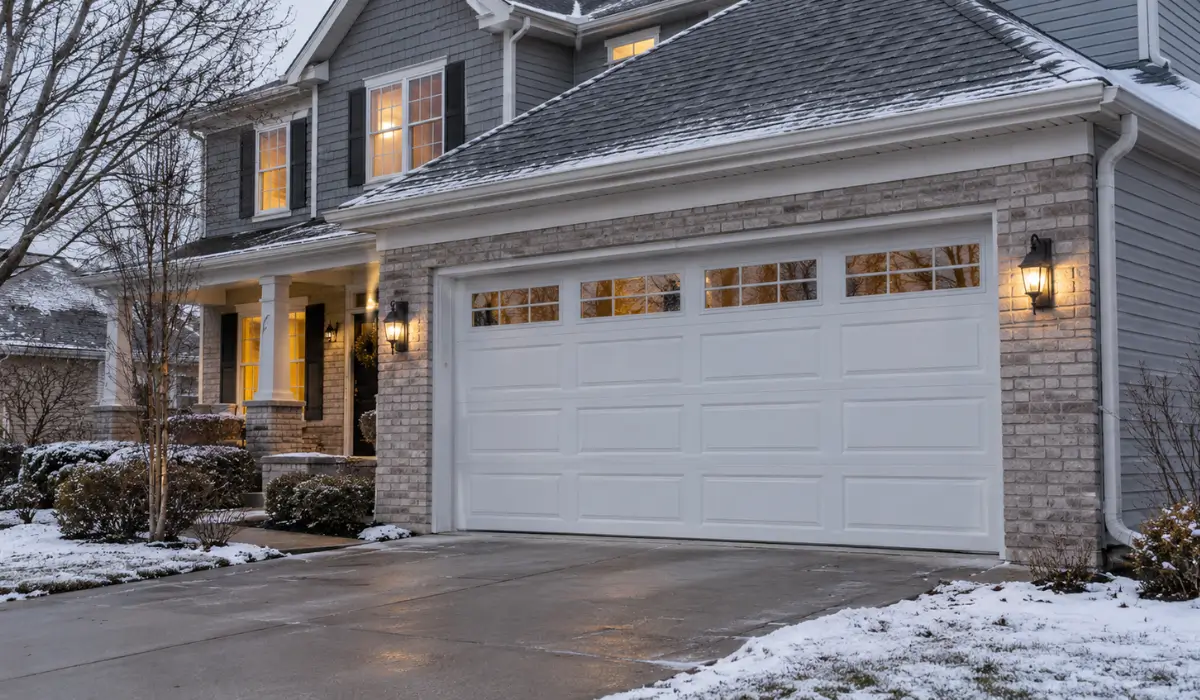
Yes. Garage door insulation can help in cold weather by slowing heat transfer through the door and helping the garage maintain a more stable temperature. The benefit tends to matter most in attached garages, frequently used workspaces, and garages with living space nearby.
Insulation does not heat the garage. Results also depend on air leaks, the rest of the garage construction, outdoor conditions, and whether the space receives any heat. The team behind Innovative Garage Door has served the Chicagoland area since 1988, so homeowners considering a winter upgrade have more to think about than the insulation rating printed on a new door.
Heat naturally moves from warmer areas toward colder ones. During winter, insulation creates resistance to that movement, slowing how quickly heat passes through the garage door. The U.S. Department of Energy’s home insulation fundamentals describe insulation in terms of resistance to conductive heat flow.
Three concepts help explain what happens:
Insulation and weather sealing therefore solve different problems. Insulation slows heat moving through the door, while seals help control air moving around it. A well-insulated door can still leave a garage uncomfortable when damaged or worn seals allow significant outside air inside.
The practical difference depends heavily on how the garage connects to the property and how people use it. An attached garage beneath a bedroom has different comfort priorities than a detached structure used only for parking.
An attached garage often has the strongest case for insulation because it shares part of the building with the home. Rooms beside or above it may make temperature stability more noticeable, although the garage door alone cannot correct problems with wall or ceiling insulation, air leakage, windows, or HVAC design.
A detached garage may still benefit when it serves as a workshop, home gym, or hobby space. Insulated construction can moderate temperature changes and may add rigidity that reduces some vibration and noise. A storage-only garage may need less insulation unless its contents require protection from large temperature swings.
The useful question is not simply whether an insulated door is better. It is what you need the garage to do during winter.
R-value measures resistance to heat flow. A higher number generally indicates greater resistance, but choosing the highest available R-value is not automatically necessary for every garage.
Consider insulation in the context of the entire space:
R-value measures resistance to heat flow. A higher number generally indicates greater resistance, but choosing the highest available R-value is not automatically necessary for every garage.
Consider insulation in the context of the entire space:
| Garage Situation | Insulation Priority | What Matters Most |
|---|---|---|
| Detached storage garage | Basic to moderate | Limiting temperature swings |
| Attached garage | Moderate to higher | Door construction, seals, shared areas |
| Regular workshop | Higher | Comfort and overall garage insulation |
| Living space above garage | Higher | Whole-building conditions |
| Heated garage | Higher | Insulation plus comprehensive air sealing |
These are decision categories, not universal R-value prescriptions. Climate, door construction, home design, garage use, and manufacturer specifications can change what makes sense.
Homeowners comparing residential garage door services should consider garage door R-value alongside the complete door assembly rather than shopping by one numbe
An insulated door can have practical advantages even when a homeowner cannot calculate an exact change in utility costs. These insulated garage door benefits may include:
The strongest benefits depend on the property. A homeowner comparing the cost and value of an insulated garage door should focus on improvements that solve an actual problem rather than assuming every advantage will apply.
Exact energy-savings promises also deserve skepticism. Door size, garage construction, air leakage, heating conditions, household behavior, and weather can all affect the outcome.
A non-insulated door can remain a reasonable choice for some detached garages where basic enclosure matters more than temperature stability. Insulated construction becomes more compelling when comfort, rigidity, thermal resistance, or adjacent living areas matter.
| Feature | Non-Insulated | Insulated |
|---|---|---|
| Temperature stability | Lower | Higher |
| Resistance to heat flow | Lower | Higher |
| Door rigidity | Typically lower | Typically higher |
| Noise reduction | More limited | Often better |
| Initial investment | Typically lower | Typically higher |
Cost should follow use. During residential garage door installation, homeowners can compare insulation with appearance, operation, construction, and how the garage functions day to day.
The condition of the existing door should drive this decision. Adding compatible insulation to a sound door may be reasonable, while an older, damaged, or poorly operating door may justify replacement.
DIY insulation also adds weight. Garage doors rely on a counterbalance system, so homeowners should not improvise spring adjustments to compensate. Existing mechanical problems can instead be evaluated through residential garage door repair.
Replacement becomes more relevant when panels have significant damage, operation is already unreliable, or a purpose-built insulated assembly better suits the garage’s long-term use. The right decision starts with the condition of the door already in place.

Even a highly insulated door cannot compensate for every opening in a garage. Worn bottom seals or gaps along the sides and top can admit cold outdoor air regardless of the R-value of the panels.
The Department of Energy’s home air-sealing recommendations treat uncontrolled air leakage separately from insulation. Before assuming more insulation is necessary, check weather seals, windows, wall and ceiling insulation, door alignment, and connections with adjacent living areas.
Seasonal checks can reveal problems insulation cannot correct. Our fall garage door maintenance tips cover areas worth reviewing before temperatures fall.
Think of winter performance as a system: insulated panels slow heat transfer, seals control air movement around the door, and the surrounding construction affects what happens to the remaining heat.
Illinois winters make thermal performance relevant, but they do not make the highest insulation level necessary for every property. The Illinois climate information from the Illinois State Climatologist documents the state’s substantial seasonal temperature differences.
In Naperville, Lisle, Woodridge, and surrounding communities, Naperville winter upgrades should begin with the actual weakness. A hypothetical bedroom above a cold attached garage, for example, may benefit from improving an old non-insulated door, but persistent discomfort could also involve the ceiling, air sealing, or HVAC system.
Garage door insulation makes the strongest case when garage temperature affects how the household actually uses the space. An attached garage, frequent workshop use, or living space nearby can make thermal performance more valuable than it would be in a detached storage structure.
Before deciding, separate three questions: Is heat moving too easily through the door? Is cold air entering around it? Is the existing door old, damaged, or poorly suited to current use? Those answers help distinguish between better insulation, improved weather sealing, repair, and replacement.
A warmer-feeling garage starts with identifying what is actually making the space uncomfortable. Insulation can slow heat transfer, but door condition, weather sealing, surrounding construction, and daily use determine how much that improvement matters.
The team behind Innovative Garage Door has served the Chicagoland area since 1988. Innovative Garage Door, Inc., open since 1995, installs and services residential garage doors, and our team can help homeowners consider insulated options for different applications.
Homeowners considering replacement before another Illinois winter can discuss garage door installation with our team to determine an appropriate next step for their garage. The conversation can focus on the existing door, how the space is used, and which door characteristics fit those needs.

