


Fall is a smart time for garage door maintenance because it gives homeowners time to spot wear, test safety features, and address developing problems before colder weather arrives.
Homeowners routinely clean gutters, service furnaces, seal windows, and shut down outdoor faucets before winter. The garage door belongs on that list because its springs, cables, rollers, weather seals, safety features, and opener affect daily operation.
Innovative Garage Door has served Chicagoland since 1988. We want homeowners to know what they can safely inspect, which warning signs deserve attention, and when a technician should take over.
Fall also follows months of warmer-weather use. If your door became noisier, heavier, uneven, or less consistent during summer, note those changes. Our breakdown of how summer heat affects garage doors adds context for seasonal symptoms.
A useful fall check starts with knowing what is normal for your door. Changes in sound, movement, balance, or safety performance can then help you decide what needs attention as winter approaches.
September is a practical time to establish that baseline while there is still time to address problems you find.
| Month | Purpose | What to Do |
|---|---|---|
| September | Establish a baseline | Inspect visible parts, complete fall garage cleaning, lubricate approved points, and note normal movement. |
| October | Address wear | Check seals and balance; test opener safety features. |
| November | Finish preparation | Complete unresolved seasonal garage tune-up work, check the backup battery if equipped, and test the emergency release as directed. |
| December | Monitor changes | Compare new noise, movement, or balance changes with your fall baseline. |
Prepare Today. Save Tomorrow. The goal is to recognize meaningful changes early enough to decide whether the door needs attention.
Springs counterbalance the door, rollers travel through the tracks, seals close gaps, and the opener powers movement. Poor balance can make the opener work harder, rough rollers can change travel, and damaged seals can leave gaps.
As temperatures fall, metal components can contract, some lubricants may become less fluid, aging seals may harden, and existing wear may become easier to notice. The effect depends on the component and its condition, so manufacturer instructions matter more than simply adding more garage door lubrication.
Leaves, dirt, wind, and moisture can create separate concerns around tracks and seals. Some symptoms may also have developed earlier, as our discussion of garage door problems during heatwaves illustrates.
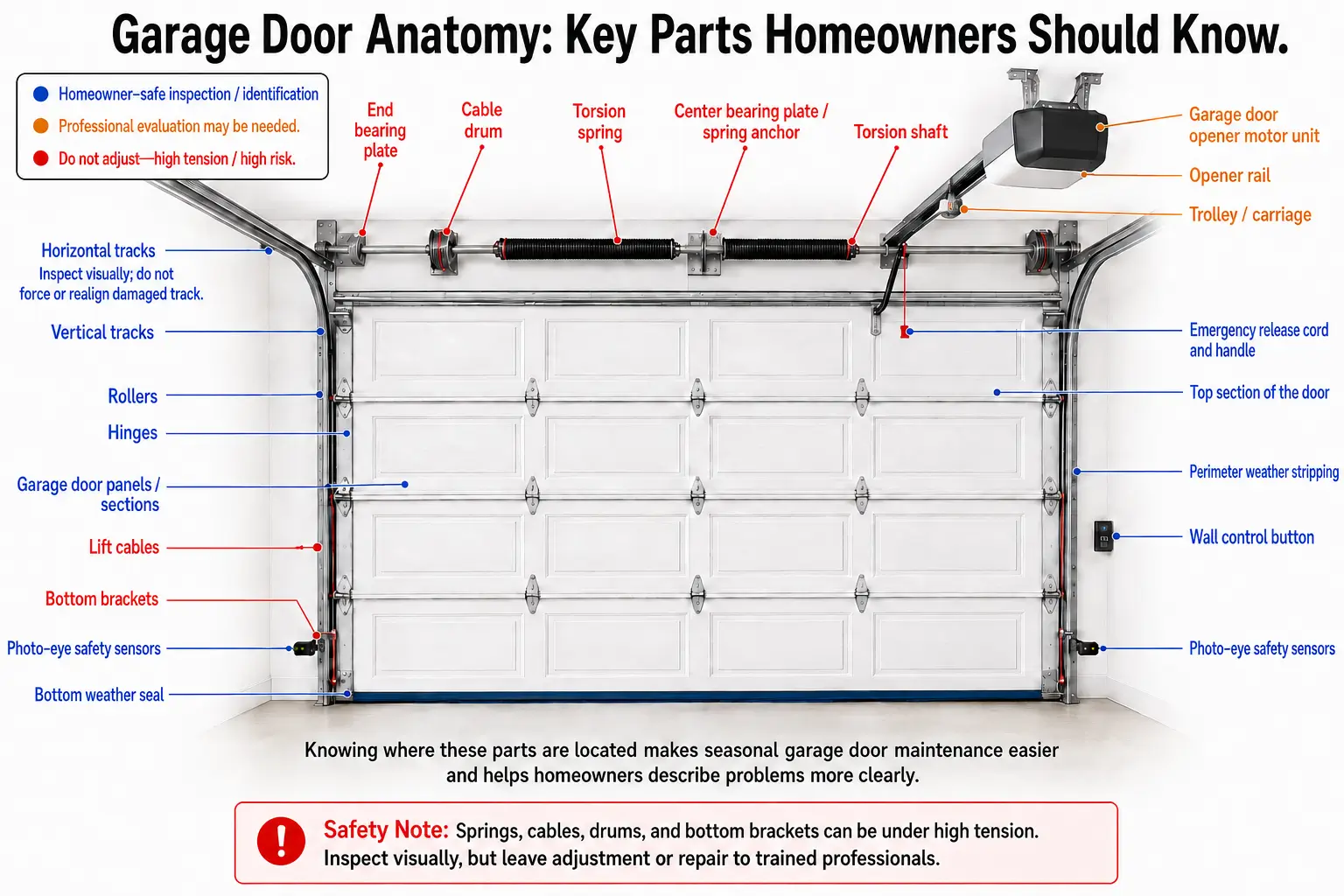
Homeowners can perform visual checks, cleaning, appropriate lubrication, and manufacturer-directed tests. Springs, cables, and other high-tension components require professional care.
Safely disconnect the opener according to its instructions. If the door feels unusually heavy, drops, rises unexpectedly, or moves unpredictably during a garage door balance test, stop and have the balance system evaluated.
Follow manufacturer guidance for hinges, bearings, compatible rollers, end bearings, and specified spring surfaces. When you lubricate rollers, use an appropriate product. Lubrication reduces friction but cannot repair worn hardware.
Check for cracks, flat spots, wobbling, worn surfaces, noisy bearings, or irregular travel. Sound is a clue, not a diagnosis.
Look for fraying, corrosion, broken strands, or incorrect positioning. Do not pull, loosen, cut, or reset a cable. Cable-related work is included in our residential garage door repair services.
Look for rust, visible separation, uneven lifting, or increased door weight. Do not rewind, reposition, remove, or adjust springs.
We handle torsion spring work as part of residential service. High-tension spring repair belongs with trained personnel.
Look for cracks, hardened material, missing sections, or daylight around the closed door. Properly installed weather stripping helps reduce air leakage around gaps in an opening.
A garage door weather seal replacement should be based on the seal’s condition.
Clean the lenses and clear the beam path. If problems continue, follow the opener manufacturer’s instructions or have the system checked.
Federal garage door opener safety requirements include entrapment-protection provisions.
A garage door safety inspection should verify operation, not encourage unverified force or travel adjustments.
Remove accessible debris and look for rubbing, damage, repeated binding, loose hardware, or obvious misalignment. Do not force bent or misaligned track into position.
Run a complete cycle from the wall control and remote. Watch for hesitation, stopping, changed movement, or unusual sound. If equipped, check the backup battery and smart functions according to the manufacturer’s instructions.
Use this seasonal garage tune-up checklist for a faster review:
Movement: Watch one complete cycle.
A garage door inspection should clarify condition, not create high-risk DIY repairs.
A garage door may still operate while wear develops.
| Warning Sign | What It May Mean |
|---|---|
| Dry or Noisy Rollers | Increasing friction or bearing wear |
| Weak Spring System | Deteriorating balance |
| Cracked Seal | Uneven sealing |
| Obstructed Sensors | Interrupted safety beam |
| Door Out of Balance | Added opener workload |
These signs narrow the possibilities but do not confirm a diagnosis.
💡 Did You Know?™
A properly counterbalanced garage door should require relatively little effort to lift manually after the opener is safely disconnected according to the manufacturer’s instructions. If it feels unusually heavy, stop and have the spring and balance system evaluated.\
👨🔧 Technician Perspective™
A problem noticed on a cold morning did not necessarily begin that morning. Wear may have developed earlier, which is why new noise matters more when it appears with heavier movement, uneven travel, visible wear, or changed balance.
Chicagoland’s shift from summer into colder fall conditions creates a practical window for seasonal checks. The door’s condition matters more than choosing one perfect date.
For a Lisle door prep checklist, include the garage door with other seasonal exterior checks. The same awareness used for garage preparation for severe weather can help identify debris, moisture, or changing conditions around the opening.
If your search started with garage door maintenance Lisle, check the communities we serve to confirm coverage. A search such as garage door service Lisle is only a starting point; also confirm the company works on your type of door, opener, spring, cable, or problem.
Basic cold weather maintenance can include cleaning, observation, appropriate lubrication, and manufacturer-directed testing. Springs, lift cables, significant track adjustment, and unresolved balance problems require professional evaluation.
| Homeowner Checks | Professional Maintenance |
|---|---|
| Clean sensors and accessible debris | Diagnose abnormal movement or noise |
| Inspect visible components and seals | Evaluate springs and cables |
| Test controls and safety features | Correct mechanical or balance problems |
Use a simple rule: clean accessible debris, monitor minor changes, stop using the door if movement appears unsafe, and schedule service when the cause or repair is unclear.
If a garage door safety inspection uncovers a mechanical problem, our professional garage door repair services cover residential doors and openers.
If your search began with garage door maintenance near me, look beyond distance. Confirm coverage and experience with your equipment. A garage door tune-up is useful when it confirms normal operation or identifies a problem needing attention.
Why is fall the best time for garage door maintenance?
Fall gives homeowners time to check balance, seals, lubrication, and safety features before colder weather becomes routine.
How often should I service my garage door?
Follow the schedule for your door and opener. Annual garage door maintenance may suit some systems, but new noise, movement changes, damage, or failed safety features should be addressed when they appear.
What lubricant should I use on my garage door?
Use a product approved for the specific component and follow manufacturer instructions.
How do I know if my garage door is out of balance?
After safe disconnection, unusual heaviness, dropping, unexpected rising, or unpredictable movement can indicate a balance problem.
Can cold weather damage garage door springs?
Do not assume cold caused the problem. Wear, corrosion, fatigue, or another developing condition may already exist.
Should I replace my weather seal before winter?
Replace it when cracking, hardening, missing material, or gaps prevent proper sealing. Garage door weather seal replacement should be condition-based.
Is a garage door tune-up worth it?
A garage door tune-up can identify wear, poor balance, failed safety features, or lubrication needs. It cannot guarantee against future failure.
Garage door maintenance belongs in fall home care because the door combines moving hardware, safety systems, weather sealing, and daily access.
If it passes homeowner-safe checks, continue monitoring it. Poor balance, damaged springs or cables, abnormal movement, or a failed safety test goes beyond fall garage cleaning and should be professionally evaluated.
Our garage door industry experience spans decades of residential installation and repair throughout Chicagoland, with a focus on fair pricing, quality workmanship, and practical solutions.
If your inspection reveals unusual movement, damaged hardware, or a safety concern, request garage door service from our team or call (630) 271-9343.

