

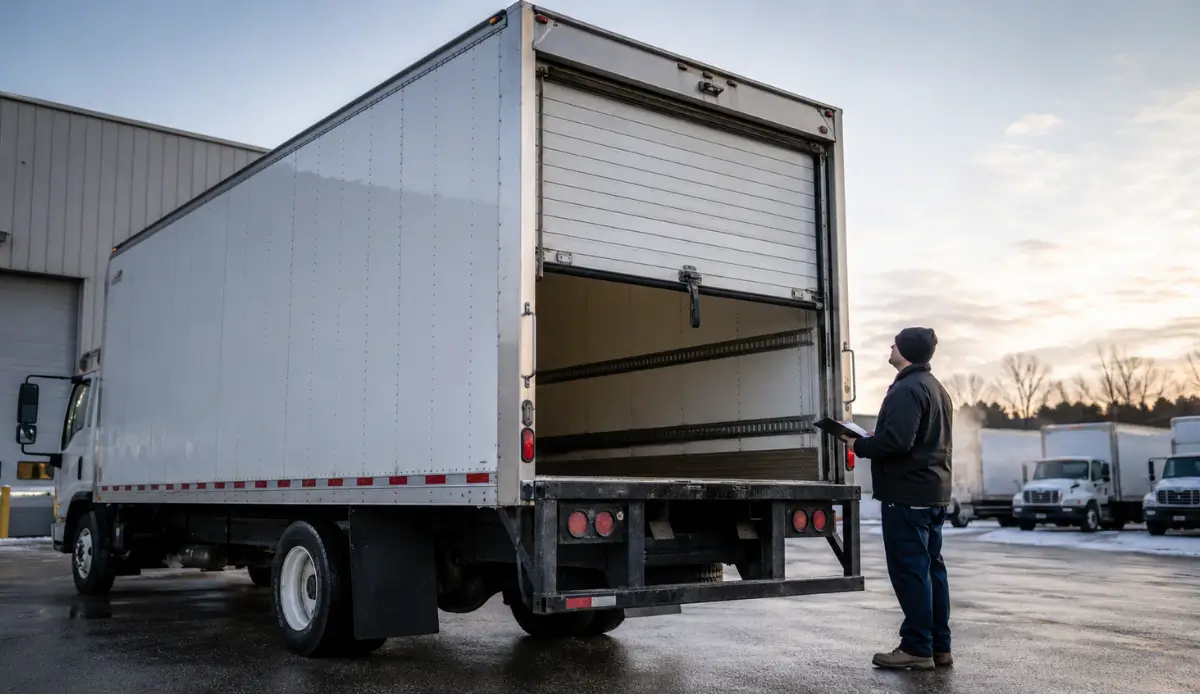
Cold weather can make box truck doors harder to operate as lubricants thicken, seals lose flexibility, moisture freezes, and existing wear becomes more noticeable. A fall inspection gives fleet managers time to address developing problems before they disrupt winter routes.
On the first cold morning of the season, drivers may be loaded and routes ready, only for a roll-up door to refuse to open. The truck can be mechanically ready to move while the driver cannot reliably reach the cargo. Even a short delay can affect departures, productivity, routes, and customer appointments. The roll-up door is part of the vehicle’s productivity system.
That makes fall door maintenance an operations issue, not just a repair issue. Innovative Garage Door services truck and trailer door systems throughout Chicagoland. September gives fleet managers time to identify wear and plan service before colder weather and peak delivery schedules reduce that flexibility.
| Timing | Fleet Door Priority |
|---|---|
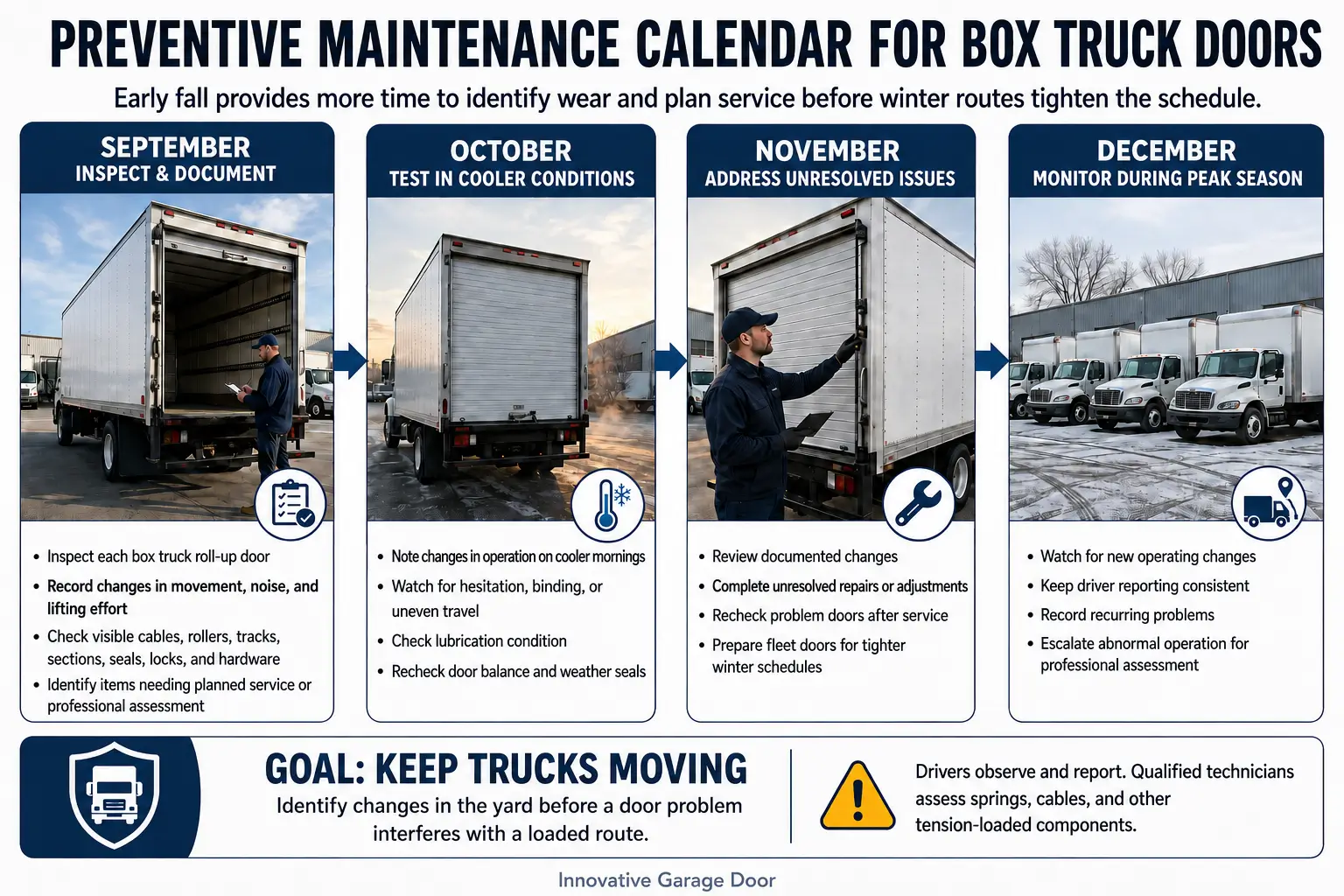
| September | Inspect every door, document wear, replace worn components when appropriate, and schedule required maintenance. |
| October | Test operation during cooler mornings and verify lubrication and door balance. |
| November | Complete unresolved repairs or adjustments before peak demand. |
| December | Monitor operation during peak delivery season. |
Goal: keep trucks moving, not waiting for emergency repairs.
When an inspection identifies damage or abnormal operation, our box truck roll door repair service provides a direct next step for professional assessment and repair. The first step is recognizing what colder conditions can change or expose.
Colder conditions can make existing wear, corrosion, contamination, alignment problems, or inadequate lubrication easier to notice.
Tracks, rollers, cables, springs, sections, and seals work as a system. The useful signal is a change from normal operation. New resistance, hesitation, or noise deserves inspection rather than more force.
A door that sticks or stops moving has moved beyond routine seasonal observation. Our stuck roll-up door troubleshooting resource covers common conditions that can interfere with normal operation.
A door may operate normally on a warm afternoon but become harder to move on a cold morning. That change does not automatically mean the temperature caused the problem. Worn rollers, marginal lubrication, corrosion, deteriorating seals, or alignment problems may already be present.
Frozen truck rollers may involve moisture, contamination, bearing damage, or existing wear. Drivers should record where the door hesitates, what sound it makes, and when the change occurs rather than diagnose the cause.
A practical fleet maintenance checklist should cover movement, hardware, sealing, and visible component condition rather than simply confirming that the door opens.
Drivers observe and report. Qualified technicians should assess or repair springs, cables, and other tension-loaded components.
For fleets subject to federal motor-carrier rules, 49 CFR 396.3 establishes systematic vehicle maintenance requirements. This door-specific checklist can support a broader maintenance process but does not replace required inspections or maintenance obligations.
Watch for uneven travel, unexpected movement, or changed lifting effort. These changes can point to a problem in the lifting system.
Look for fatigue, rust, deformation, or changes in door balance. Drivers should not attempt spring adjustments.
Check for corrosion, broken strands, fraying, or visibly uneven condition. If a box truck cable snaps or shows serious deterioration, arrange an assessment by a qualified technician.
Check for flat spots, wobble, bearing wear, and rough movement that can interfere with smooth door travel.
Look for impact damage, debris, loose hardware, and visible misalignment that can contribute to binding or uneven movement.
Check for dents, cracks, separation, and unintended gaps that can affect fit, sealing, or movement.
Confirm secure engagement and smooth operation so the cargo area closes and latches as intended.
Check for cracks, missing material, stiffness, and gaps that can allow moisture, dirt, and outside air into the cargo area.
Look for cracks, loose hardware, bending, and visible wear that can affect how adjoining sections move.
Check for missing or visibly loose hardware. Vehicle vibration can loosen fasteners over time.
Check appropriate moving points for dryness or contamination. Follow maintenance instructions for the installed system because lubricants and service points can vary.
Open and close the door through several normal cycles. Listen for new sounds, watch for hesitation or uneven travel, and record changes.
The repair invoice is only one part of a roll-up door failure. Downtime can affect drivers, dispatch, loading, maintenance schedules, and customer commitments.
There is no single downtime cost that applies to every fleet. A practical internal estimate can include:
| Downtime Impact | Business Effect |
|---|---|
| Missed Windows | Customer and schedule disruption |
| Driver Idle Time | Reduced productivity |
| Emergency Repairs | Unplanned expenses |
| Vehicle Unavailable | Route rescheduling |
| Cargo Access Delays | Longer loading and unloading times |
| Repeat Breakdowns | Increased maintenance planning |
The repair is one event. Operations absorb everything around it. That is why fleet preventative maintenance is about more than repair spending.
When recurring failures make another repair harder to justify, factors such as condition, repair history, downtime, parts availability, and remaining vehicle life become part of the decision. Our box truck repair versus replacement comparison addresses that decision in more detail.
💡 Did You Know?
Many commercial roll-up door problems begin gradually. A slightly noisy roller, minor cable wear, or a bent track may not stop a truck today—but addressing those issues early can help reduce the likelihood of more disruptive failures later.
Technician Field Note
“We often see fleets where every truck follows the same maintenance schedule for the engine, but the roll-up doors are only serviced after something breaks. Adding the doors to your seasonal inspection routine can help catch worn components before they interrupt deliveries.”
Drivers operate these doors more often than fleet managers observe them firsthand. Their role is simple:
Ask drivers to report new sounds, increased lifting effort, recurring hesitation, cable fraying, rough rollers, bent sections, latch problems, seal gaps, or unexpected moisture.
For drivers and vehicles subject to 49 CFR 396.13, federal pre-trip inspection requirements include being satisfied that the vehicle is in safe operating condition before driving.
Drivers should not repeatedly force a door through abnormal resistance. A door that will not open requires closer attention. Our stuck box truck door information covers the symptoms and service considerations for that more urgent problem.
Northern Illinois fleets face fall temperature swings, freezing moisture, road salt, and winter contamination. Checking box truck doors in September gives fleet managers an early opportunity to identify changes before freezing conditions become more frequent.
We have served Chicagoland since 1988, with a garage door installation and repair background spanning residential, commercial, truck, and trailer door work.
Fleet managers planning local service can confirm whether their location falls within our Chicagoland service areas.
Once a problem is identified, the next question is how much of the door actually needs attention.
A failed component and a failed door are not necessarily the same thing.
| Condition | Next Step |
|---|---|
| Minor Roller Wear | Assess the wear and plan preventive service |
| Frayed Cable | Arrange a qualified assessment |
| Bent Track | Inspect the damage and determine the cause |
| One Damaged Panel | Assess whether the section requires repair or replacement |
| Repeated Breakdowns | Evaluate the complete door and its repair history |
| Multiple Aging Doors | Consider phased maintenance or replacement |
When damage is limited to one section, box truck roll up door replacement panels may be an alternative to replacing the complete door. The tracks, lifting hardware, adjacent sections, and overall door condition still need to be assessed.
Finding compatible box truck roll up door repair parts is only one part of the repair decision. The underlying cause still needs to be identified before replacing a component.
A vehicle that repeatedly needs truck roll up door repair or commercial truck door repair deserves a review of its service history.
When evaluating box truck roll up door replacement cost against another repair, consider the door’s overall condition, repair history, downtime, parts availability, operating needs, and remaining vehicle life.
When deciding whether to repair a box truck door, start with the condition and cause, not only the visible failed part.
Whatever the repair decision, consistent records make future changes easier to recognize.
A practical commercial roll up door maintenance process is:
For vehicles subject to 49 CFR 396.17, federal periodic vehicle inspection requirements remain separate from this door-specific maintenance routine.
When a truck needs local box truck roll-up door repair, consistent records show when symptoms began and how they changed. Those records can also give mobile fleet repair teams clearer information about the vehicle’s reported symptoms and maintenance history.
Every truck should finish the fall inspection in one of three categories:
| Status | Meaning |
|---|---|
| Operating Normally | No meaningful change in operation |
| Planned Attention | Wear or changes can be addressed during scheduled maintenance |
| Professional Assessment | Damage or abnormal operation requires qualified attention |
Start with one truck. Open and close the door while listening for new sounds and watching for changes in movement. Then check visible cables, rollers, tracks, sections, hardware, seals, and locks without adjusting tension-loaded components.
Cold weather does not create every roll-up door problem. It often reveals wear that has been developing throughout the year.
A door problem identified in the yard gives a fleet more options than one discovered after the truck is loaded. Reliable cargo access supports drivers, routes, loading, and dependable deliveries.
Hard operation, cable wear, damaged sections, or recurring door problems deserve professional assessment before they interfere with scheduled routes. Our team can assess the reported problem and recommend service based on the condition of the door and its components.

